Designing Live Commerce & Short-Form for Sales
Words by
Shoplive
Lessons from running video commerce for 240 brands across 20 countries: 2025 live commerce trends, live vs. short-form roles, and how to choose solutions and ads.
No headings found on page
Video commerce that drives results comes from organically connecting three elements, content, solution, and advertising, and running live and short-form video together. We've distilled the 2025 trends and hands-on design principles we discovered while running live and short-form video for more than 240 brands across 20 countries.
What we've discovered running video commerce with 240 brands across 20 countries
Live and short-form video. Plenty of companies do it, but doing it well seems hard for everyone.
To reach more customers through live and lift conversion rates through short-form video, how should you create your content? What criteria should guide your choice of solution, and how should you approach advertising?
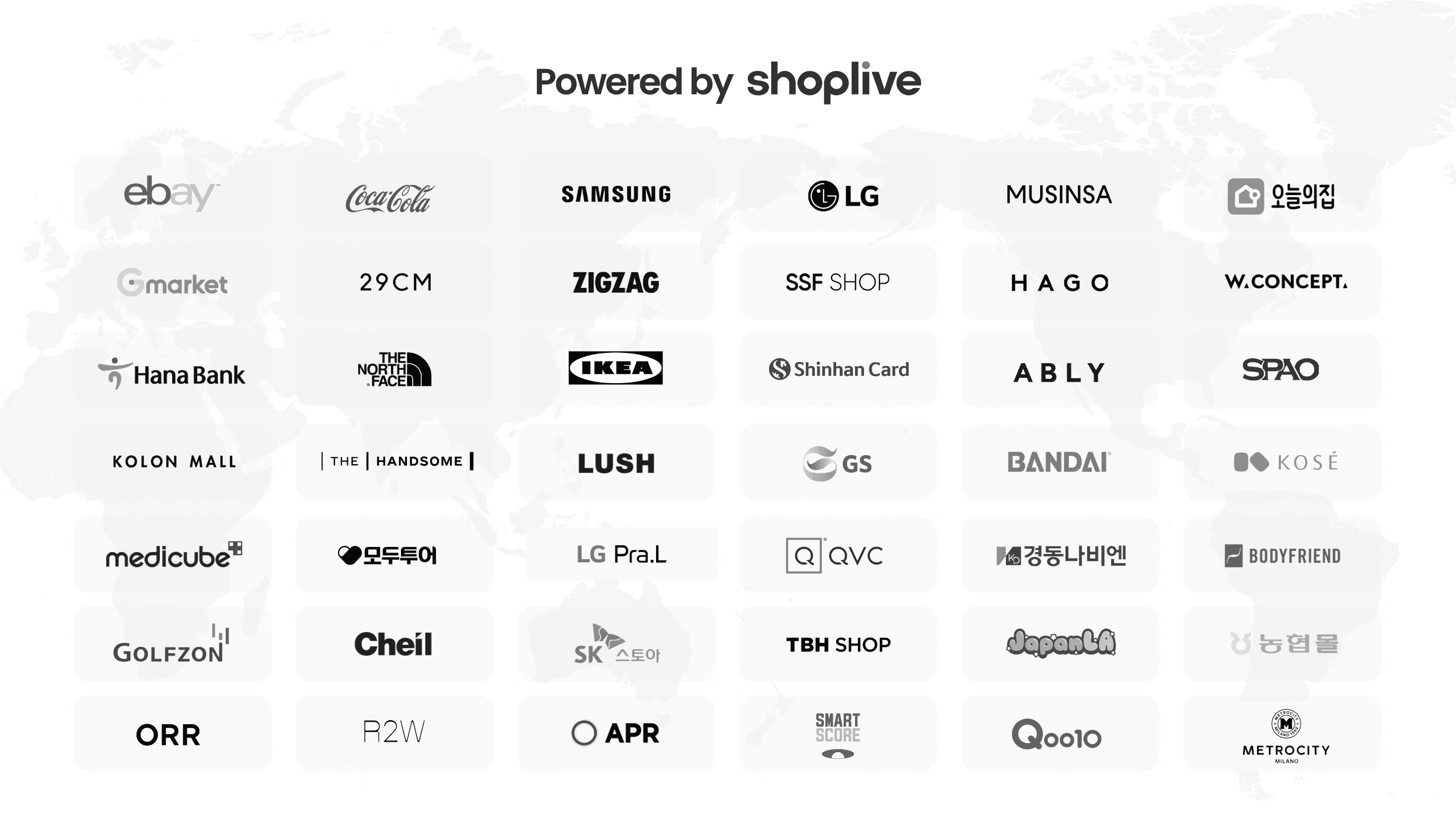
Shoplive has designed and operated video commerce with more than 240 brands across roughly 20 countries, including Korea, North America, Japan, and Southeast Asia.
From commerce platforms such as Musinsa, 29CM, Zigzag, W Concept, Hago, Ohou, GS Shop, eBay, and QVC, to D2C brand stores such as LG Electronics, Samsung Electronics, SPAO, Medicube, Pulio, Kyungdong Navien, Bodyfriend, and Modetour.
We've distilled the ways to build video commerce that drives results that we discovered while broadcasting hundreds of live streams every day around the world.
Three keywords for 2025 live commerce operations: D2C, CRM, and advertising
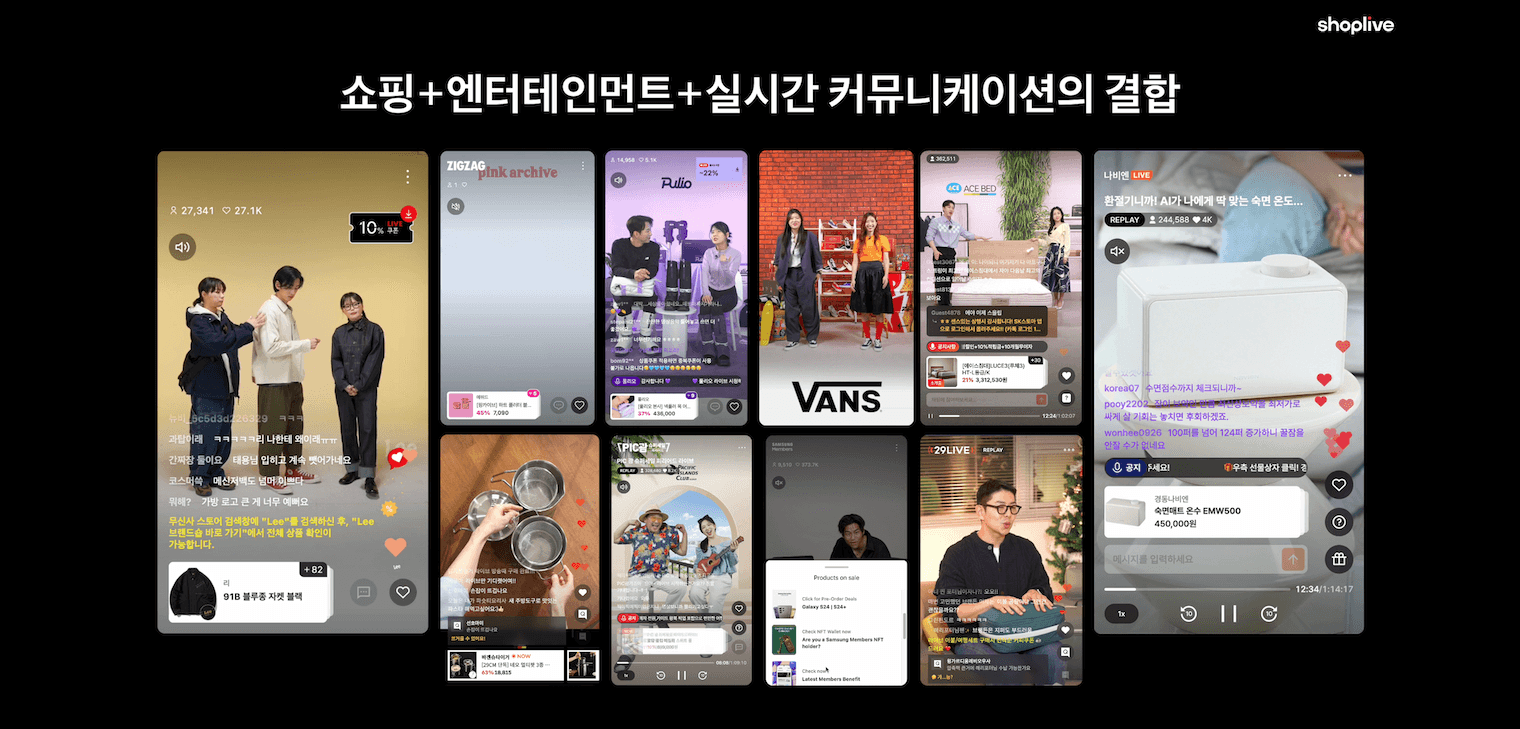
Mobile live commerce is a new kind of content that combines shopping, entertainment, and real-time interaction. Customers see products on video, ask questions via live chat, and buy right there on screen. It reflects the shopping experience customers expect in a mobile environment better than any other approach, and it's steadily establishing itself as a familiar and effective sales channel.
The spread of mobile live commerce also means that a one-way selling format like traditional TV home shopping can no longer stay competitive on its own. This is clearly reflected in how home shopping channels have recently been embracing mobile.
Before we get into strategy and execution, let's take a quick look at the trends.
The way live is run today varies somewhat by country. In the global market, influencer-driven live commerce backed by solid fandoms stands out. Because the creator-centered commerce ecosystem is well established, content targeting enthusiast audiences in specific categories tends to see especially high viewership and conversion rates.
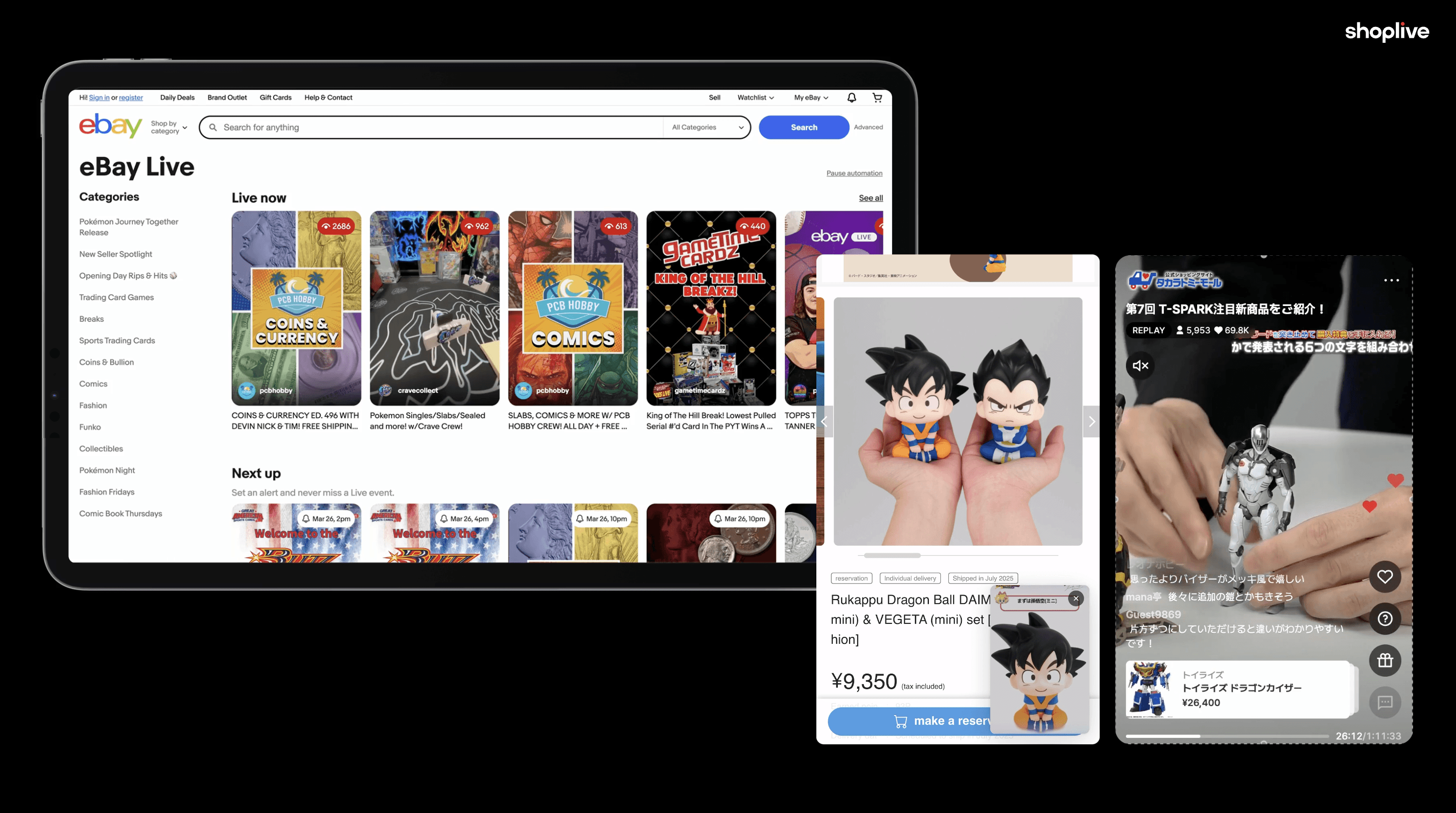
In Korea, it's common to see platforms taking the lead on the live streams of the brands they host. Performance-driven operating strategies are also relatively more pronounced. Approaches that bring in new customers and drive conversions through CRM (customer relationship management), via SMS, email, and app push, or through advertising are actively used.
Recently, D2C live streaming has also been on the rise. After experiencing successful live commerce on host platforms, more and more companies are building live solutions directly into their own channels to meet customers more often: and it's translating into revenue.
From fashion brands like Orr, R2W (Ready to Wear), and UMER to home appliance brands like Pulio and Kyungdong Navien, a growing number of brands across diverse categories are running D2C live streams, with influencer-CEOs stepping in personally or hosts chosen to match the brand's vibe, and recording hundreds of thousands of dollars in revenue per broadcast.
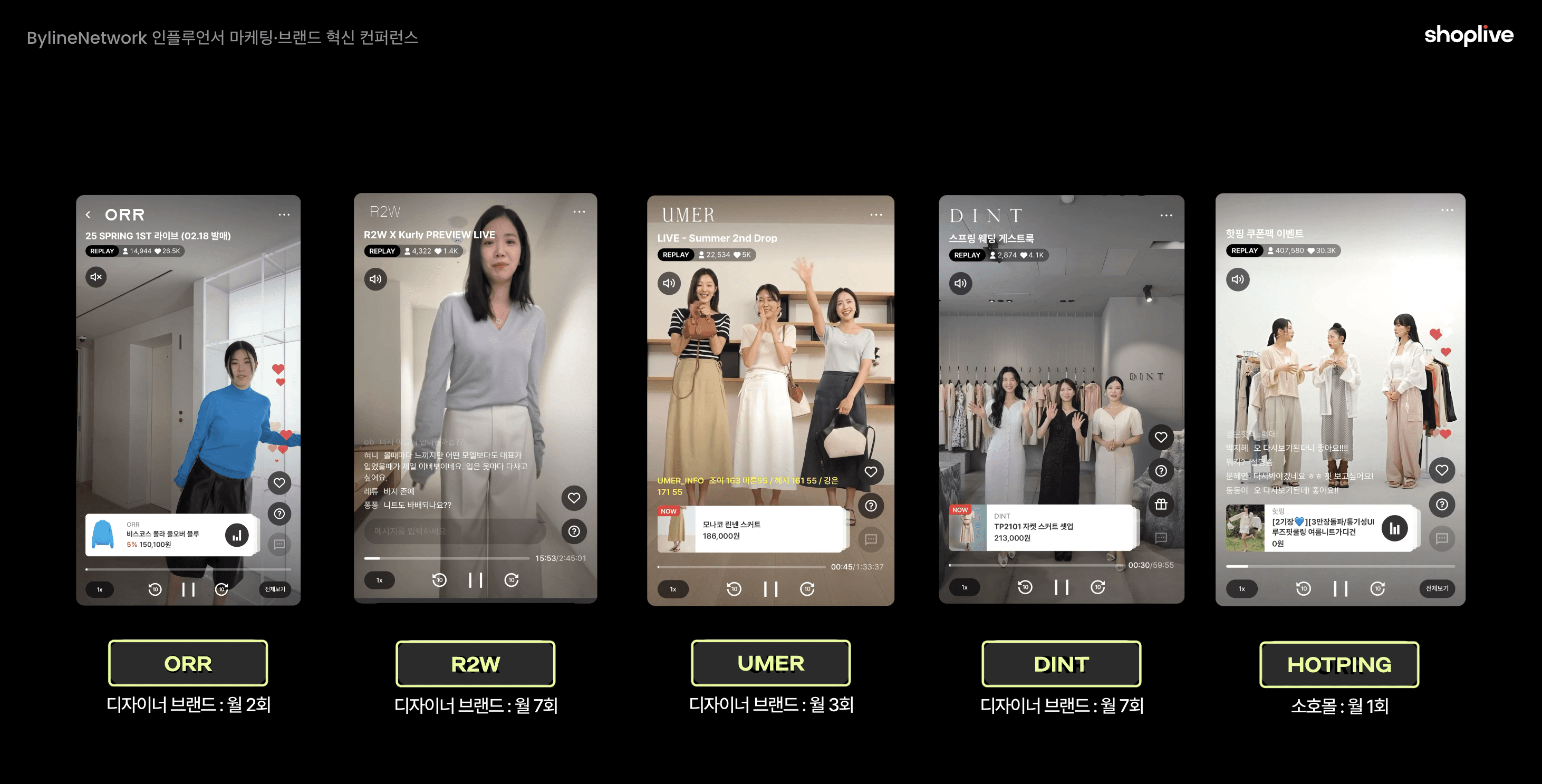
As broadcast frequency has grown, production has become more sophisticated. Unlike the early days of streaming live from the office with a single smartphone, professional production setups, high-resolution equipment and dedicated studios to deliver high-quality video content, are becoming increasingly common.
How live streams are used afterward has evolved too.
An hour of live footage no longer ends as one-off content. Using AI technology, it's repurposed into short-form content and re-surfaced across various channels such as product detail pages, expanding into a virtuous cycle that continuously generates traffic and revenue.
Short-form makes you "want it," live makes you "buy it"
Before we talk about how to do video commerce well, let's briefly look at the roles and differences of live and short-form video, the two signature content formats.
For successful video commerce, we recommend using live and short-form video together. Why? Because the two formats move customers in different ways.
Live is content well suited to "goal-oriented shopping": explaining "why you should buy" to customers who have already started weighing a purchase. Viewers of a live stream are ready to buy. They watch a model wear and move in the latest release from a fashion brand they love and buy it; they listen to detailed explanations of an appliance or beauty device they'd hesitated over because of the price, ask questions in real time, and, after seeing the broadcast's special offers, finally decide to buy. That's why live is more effective for higher-priced products or items that need explanation. It's mainly used for high-budget content and flagship brand campaigns.
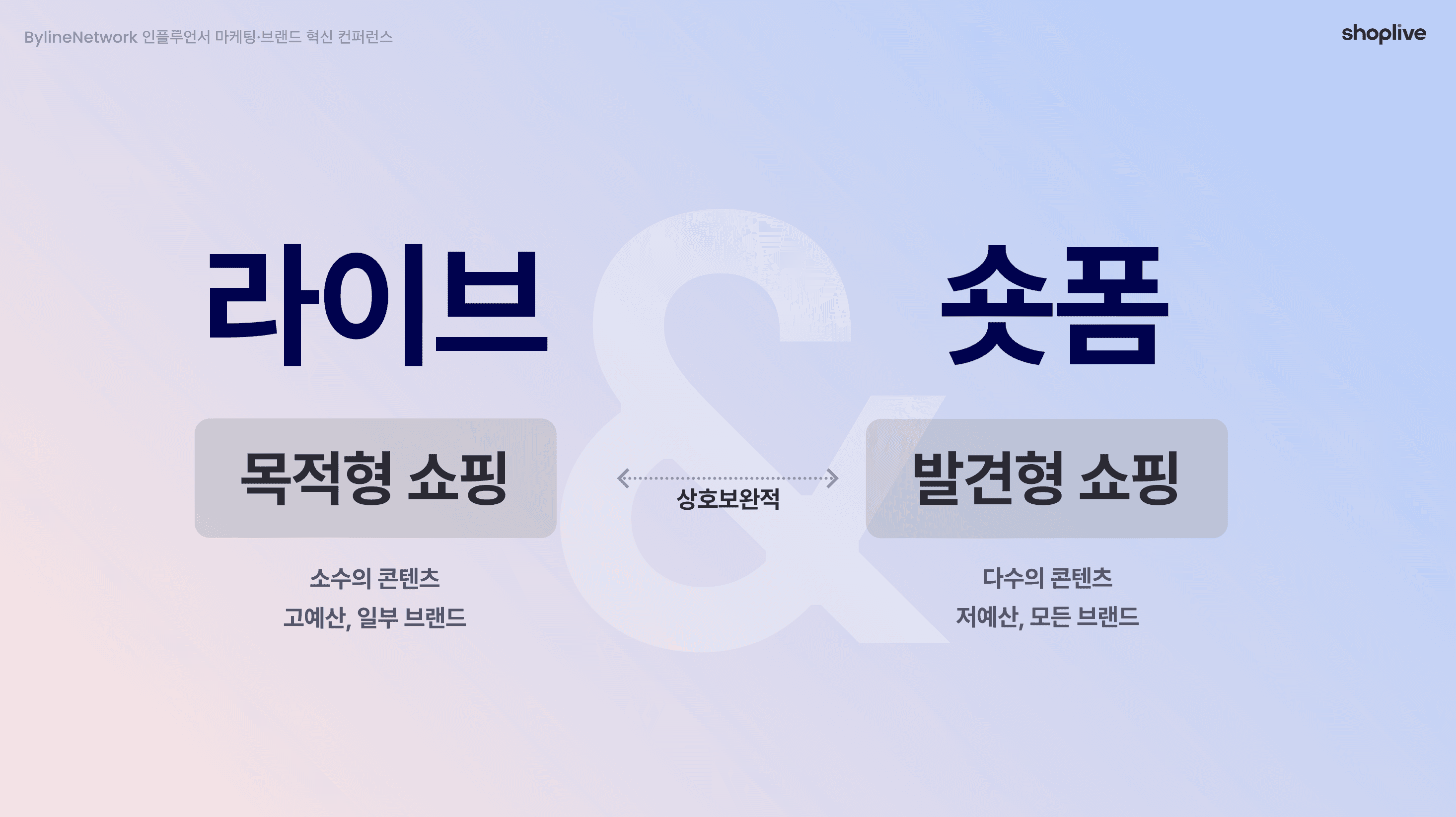
Short-form can be described as content for "discovery shopping," which is a bit stronger at generating new interest.
It plays the role of helping customers stumble upon a need or making them want something in the moment. Delivered short and impactful, it can lead even customers who didn't know the brand or weren't interested in the product to absent-mindedly click a link or add an item to their cart. It also pairs well with advertising, enabling a variety of target experiments on a small budget, and it's a content format accessible to nearly every brand.
Live and short-form video each own a different moment in the customer journey. While live persuades high-converting "hot leads," short-form continuously draws in new customers. That's why you can expect greater results when you design and run live and short-form video together.
Brands that get results from video commerce are already making good use of both formats.
Video commerce that works moves all "three" together
What else sets apart brands that do video commerce well?
To capture customers' attention and lead them to purchase, you have to design all the way through "how you create the content, where you place it, and who you show it to." That's why brands that do video commerce well move three elements, "content," "solution," and "advertising", as an organically connected whole.
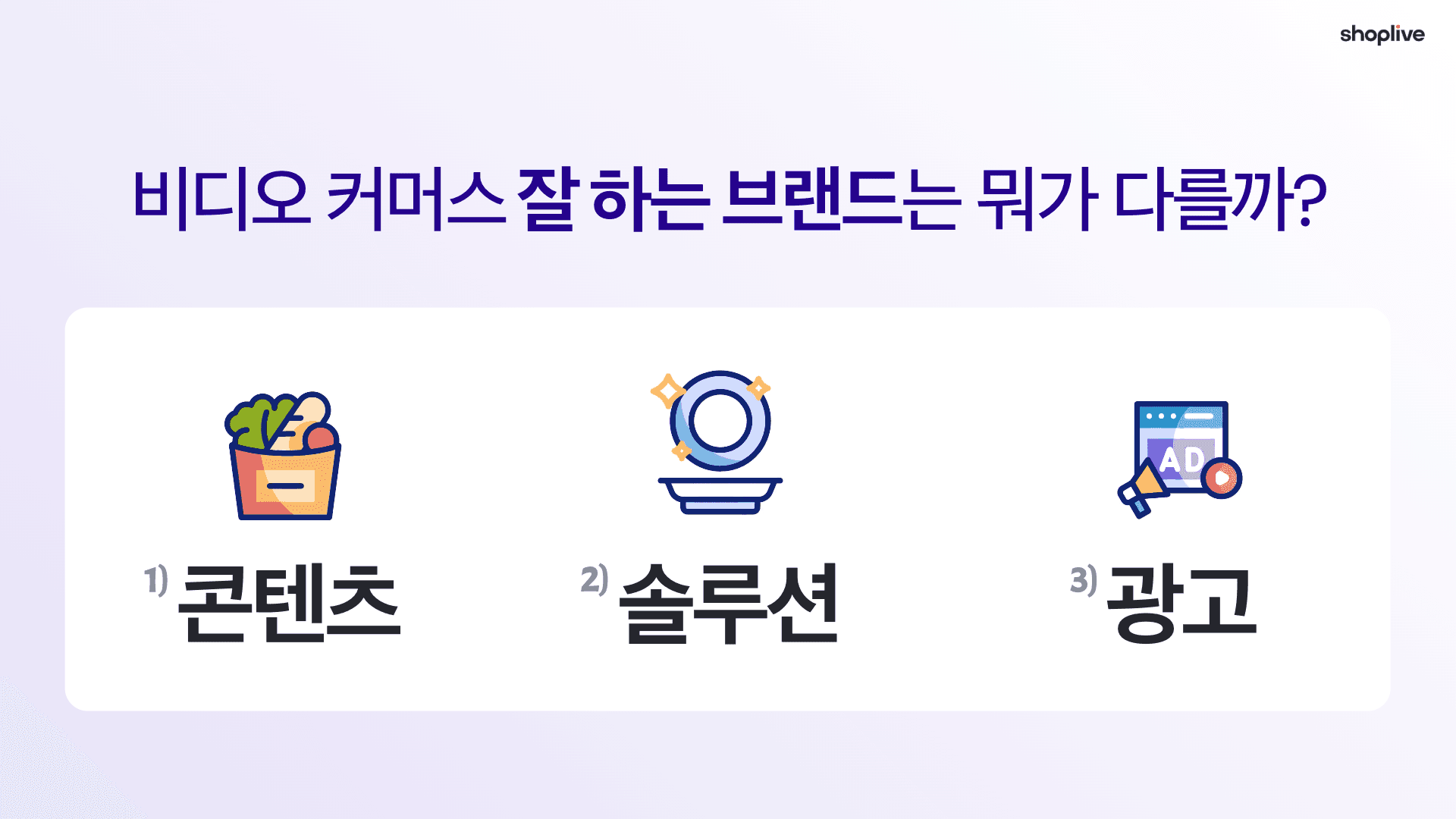
To make this intuitive, let's compare content to "the food," the solution to "the dishes," and advertising to "the guests."
A restaurant does well because the food is delicious. The core of video commerce is likewise the quality of the content. What matters is how attractively and persuasively you present the product. You also need enough dishes, in the right sizes, for the number of guests. No matter how good the content is, if the solution, the player that streams the video, the chat and payment systems, and so on, isn't well prepared, customers feel the friction and leave. And even if you prepare delicious food beautifully plated, there's no revenue if no guests show up. Here, advertising plays "the role of bringing in the guests." It's a crucial means of exposing content to new customers and getting them interested in a brand they're seeing for the first time.
If even one of the three is sloppy, it's hard for the restaurant to succeed. If the restaurant isn't known, customers can't come; and if the food isn't tasty or the dishes aren't well prepared, the customers who do come leave disappointed.
You can only generate real revenue when content (the food), solution (the dishes), and advertising (the guests) are designed and operated to mesh organically.
Content that captures hearts, commerce that opens wallets
Delicious food. How do you create the content?
Content that resonates is useful, fun, or moving. Commerce content is no different: the more naturally the following three elements come together, the higher the conversion rate.
Information: content that accurately conveys facts the customer didn't know or things they'd been curious about
Fun: the force that carries viewing through to the end and shapes the impression of the brand
Touching/Empathy: forming an emotional connection to the brand
When a single piece of content holds two or more of these, it stops being "just a video to watch" and becomes "content you want to buy." Good content should make customers want to watch and want to buy at the same time.
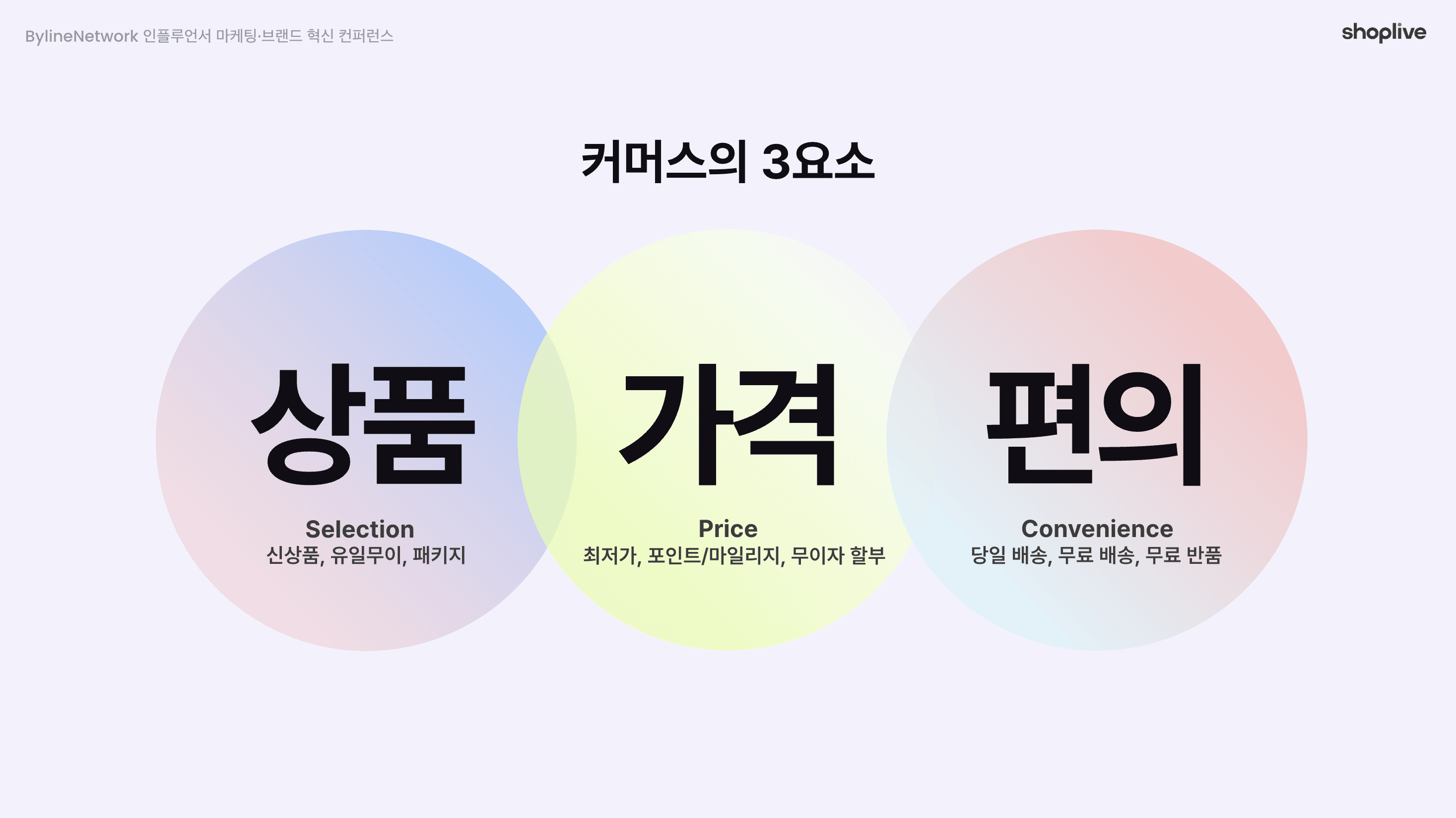
Once you've moved customers with content they want to buy, commerce has to do the work of opening their wallets. When the content is good but it doesn't lead to revenue, the most common cause is that the commerce elements aren't well woven into the content.
Selection: differentiated products or package deals that only you offer
Price: strategies that lower the barrier to buying, such as lowest-price offers and interest-free installments
Convenience: elements that make the buying experience easier, like same-day and dawn delivery
Even with plenty of information and fun, if the mechanisms that drive conversion are missing, customers will just consume the content and leave.
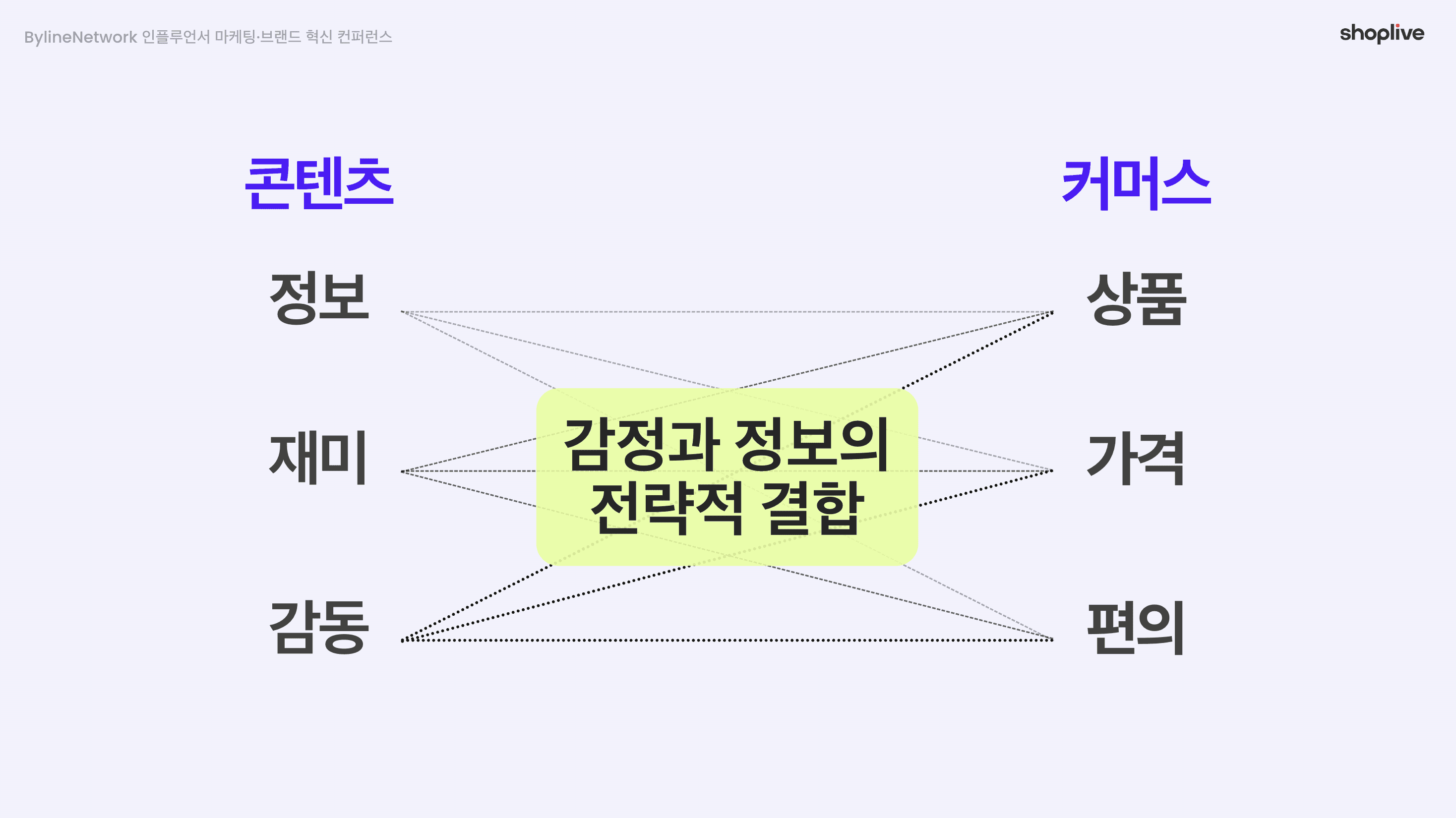
Conversely, if you push the commerce elements too hard, the content looks like an ad. It creates neither empathy nor interest, so there's no reason to stop scrolling.
Only when emotionally persuasive content and commerce that lowers purchase hurdles come together naturally does conversion that leads to revenue finally happen. It sounds simple, but it's not easy in practice. Video commerce involves far more than you'd think: not just content production, but choosing the solution, planning the product lineup, and collaborating with various internal teams to make it all happen. Realistically, it often looks daunting for a single person in charge to cover everything needed to hit the goal of conversion.
Shoplive has watched our clients' struggles from up close and provides stable technical solutions along with operational guidance for getting the most out of live and short-form video. Along with the presentation slides introduced in this article, we've prepared a resource that includes a checklist and action plan you can put to use right away. We hope it helps anyone thinking through how to run live and short-form video.
See it on video
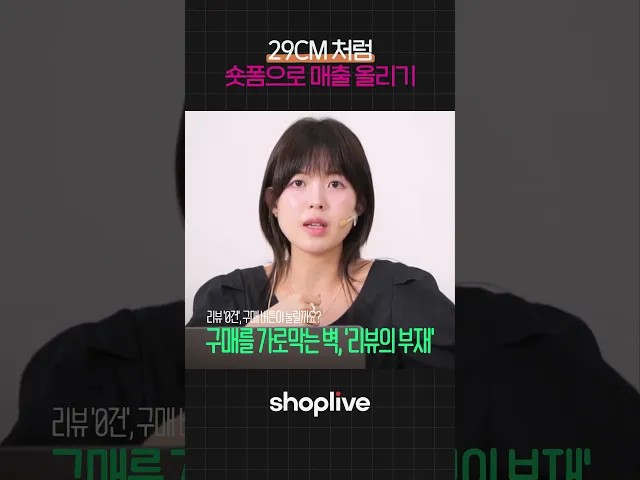
29CM explains, in their own words, why they put short-form on the product page.
The gap reviews leave — “Would someone built like me say this is well made? Is the fit good?” When a product has few reviews, that absence is itself a hurdle to buying.
Where it goes — So the short-form slot sits at the bottom of the product page, right above the reviews.
💭 Here's what the resource includes
The presentation slides that accompany this article
A checklist for raising content quality
A timeline-by-timeline action plan for maximizing live traffic and revenue before and after the broadcast
📎 Get the resource now ⮕
Frequently asked questions
Q. How are live and short-form video different?
Live is strong for goal-oriented shopping, explaining "why you should buy" to customers weighing a purchase, while short-form is strong for discovery shopping that creates new interest. Results grow when you run both formats together.
Q. What matters most in video commerce?
Organically connecting the three elements: content (the food), solution (the dishes), and advertising (the guests). If even one of the three falls short, it's hard to generate revenue.
Q. What makes good commerce content?
When two or more of information, fun, and touching/empathy are present, and commerce elements like selection, price, and convenience come together naturally, it leads to conversion.


