Concurrent Viewers
Concurrent viewers is the number of people watching at the same moment — unlike cumulative viewers, it reflects both real-time momentum and server load.
What does concurrent viewers count?
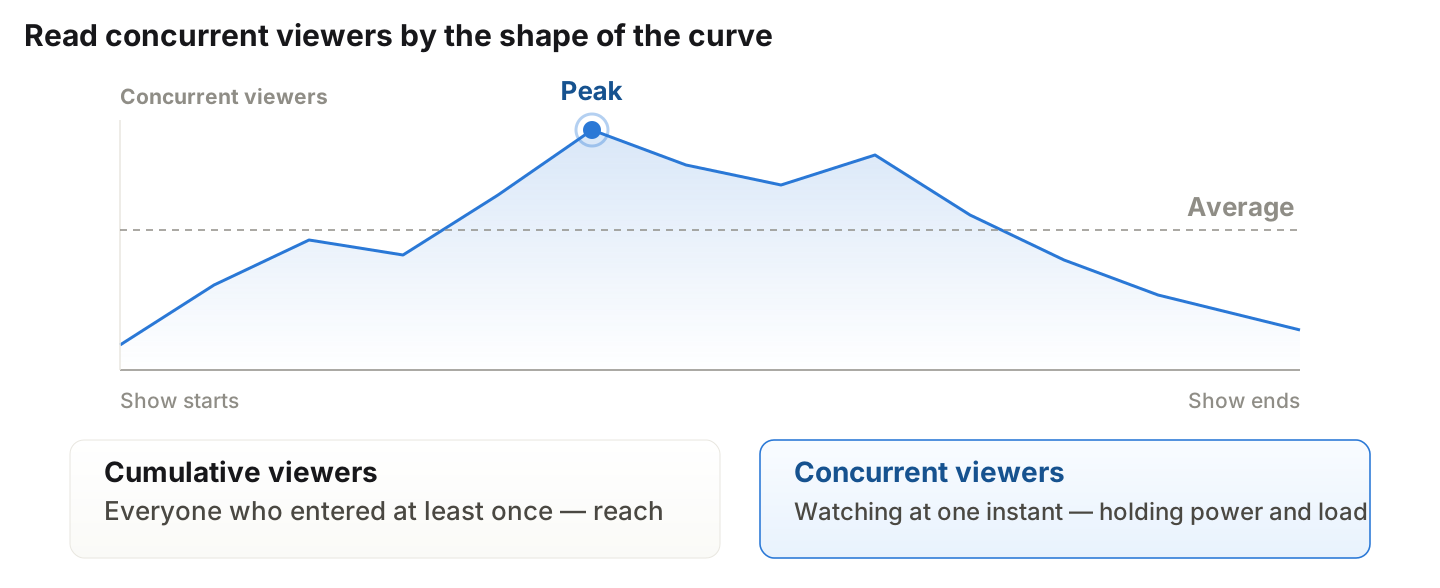
The number of people with the stream open at a given instant. It isn't a total that settles after the show — it rises and falls second by second, so when it's quoted as one number it's usually the peak. Recording peak alongside average concurrency separates a show that spiked briefly from one that held its audience.
How is it measured, and what should you read?
The platform samples active sessions at intervals and plots them. What matters is the shape, not the total. Which product lifted the line, and where it dropped, is the evidence for how you order the next run of show. Overlay the moments you issued coupons and you can see whether the offer actually held people.
Why does it matter?
Because it tells you two things at once: the strength of the content and the demand on your infrastructure. High cumulative viewers with low concurrency means people passed through; high concurrency means viewing, checkout, and coupon issuance all land in the same minute. It's one of the few metrics marketing and engineering can discuss from the same number.
How do teams use it in practice?
Before the show, set a target peak and allocate reminders and paid reach against it. During the show, place a coupon or quiz where the line usually bends. Afterwards, cut the peak window into highlight clips. If a large broadcast is coming, confirm the platform's concurrency limits and real-world references in advance.
Concurrent vs. cumulative viewers
Concurrent viewers | Cumulative viewers | |
|---|---|---|
Counts | People at one instant | Anyone who entered during the show |
Shows | Holding power and server load | Scale of reach |
Headline figure | Peak and average | Total |
Read alongside | Average watch time, conversion | Traffic source, impressions |
Trap | Peak alone flatters a brief spike | Total alone hides drop-off |
Shoplive's view
Concurrent viewers is easy to use as a bragging number. We treat it as a fitness test for the broadcast: the shape of the line across the hour changes the next show far more than the height of its peak. When checkout happens inside the viewing screen, concurrency is also concurrent payment requests — which is why content planning and capacity planning belong on the same sheet.
Frequently Asked Questions
Q. Will a large concurrent audience break the stream?
Not on a platform designed for scale. But payments and coupon issuance concentrate in the same seconds, so for a large broadcast confirm the load thresholds and real references beforehand.
Q. Which one belongs in a KPI?
Cumulative viewers for reach; concurrency plus average watch time for engagement. To connect to revenue, read them with conversion rate and average order value.
Q. Should we report peak or average?
Both. Peak alone flatters a show that spiked once; average alone buries the moment that caught fire.
Q. How do you raise concurrency?
Gather people at the start with reminders and pre-issued coupons, then use participation moments to extend how long they stay. Simulcasting to social adds inbound paths during the same hour.
Q. What should capacity planning cover?
How far above your expected peak the system holds, whether quality drops to protect latency under a surge, and whether checkout scales separately from playback.
Related terms
Learn more


Last updated