Live Commerce AI Chatbot: 5x Chat Response Rate

Words by
Roanne
Edited by
Jay
💡 Key Takeaways
Answering customer questions in live chat runs into four problems: response speed, uneven quality, headcount limits, and stale information.
With the Shoplive AI Chatbot, response rate rose 5x. Viewers who got answers stayed longer and clicked more products. Faster replies also cut down the repeat-question spam.
The AI chatbot supports genuine two-way conversation with customers, so a smaller team can resolve questions faster without adding live operators.
No headings found on page
The live chat window is where interest turns into the questions that decide a purchase. The more offers and product details a broadcast packs in, the faster those questions arrive, seconds apart. Viewers who get tired of waiting leave, and the sale leaves with them. Comment handling during a live broadcast is a revenue problem, not just a customer service one. We pulled the data to see how far the key metrics move once you add the Shoplive AI Chatbot.
What Makes Real-Time Comment Handling So Hard?
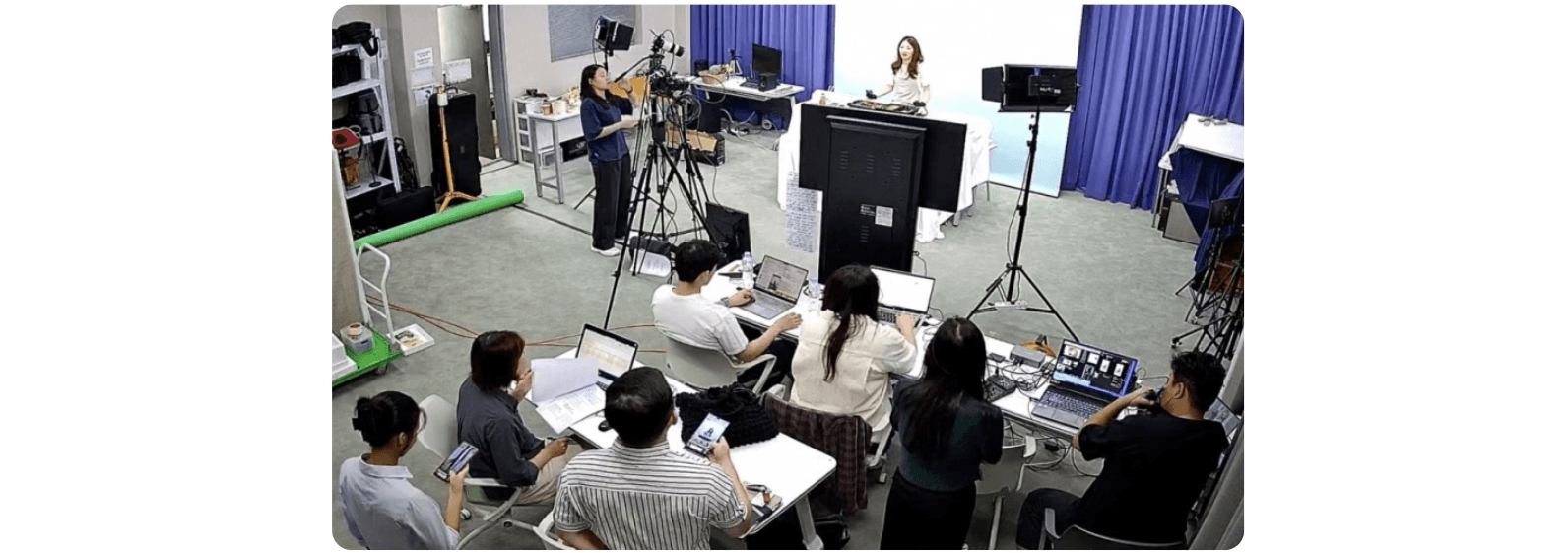
The more offers and product details a broadcast carries, the more the live operators (CS staff, MDs, marketers) managing chat run into four problems at once.
1. Response speed: when questions pile up, wait times stretch. Even for repeat questions about shipping, refunds, or sizing, an operator types a fresh answer every time.
2. Uneven quality: answers vary by operator, so the same question gets a different reply depending on who picks it up.
3. Headcount limits: when questions land all at once, some of them get missed.
4. Stale information: if promotions or stock changes are not reflected in real time, operators point customers to an offer that already ended or a product that sold out.
On large broadcasts with heavy concurrent viewership, that ceiling shows up in the numbers. Through peak stretches, questions arrive at an average of 10.27 per minute, while a single operator can answer 1.3 to 1.8 per minute. Inbound runs 5.7x higher than throughput, so adding people never closes the gap.
The problem: the bigger the broadcast, the heavier the comment load, and the harder it gets to work through comments as they stack up in real time.
How the Shoplive AI Chatbot Works
The AI builds its baseline answers from the product links, offers, and event details registered before the broadcast. On top of that, it picks up what the live host explains on air, learning in real time and folding it into its replies.
When a viewer posts a question, the AI recognizes it, reads the context, and drafts an answer. Frequently repeated questions get a fast first reply from the AI, while anything that needs judgment or a final check goes to an operator.
The same question does not get the same canned reply every time. Answers can be shaped to sound like the brand, the way an in-house rep would write them, and you can set a company persona up front to keep the tone consistent.
What the Data Shows
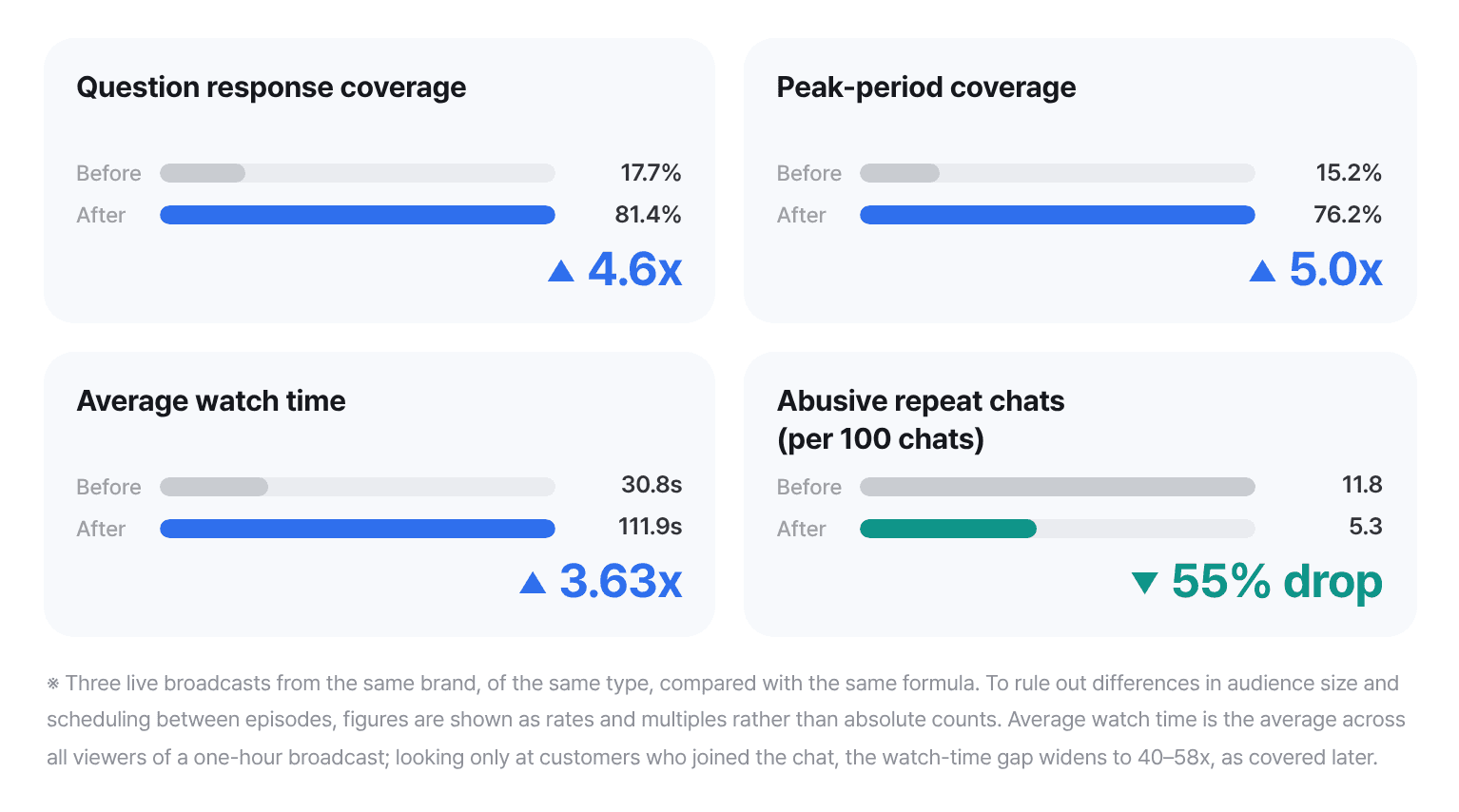
We compared three large product-launch live commerce broadcasts from the same brand, before and after the Shoplive AI Chatbot went in. Chat, viewing, and click logs were aligned episode by episode. Run time and chat volume differed across episodes, so we converted everything into 15-minute response coverage and rates per 100 chats instead of raw counts.
1) Response Rate Held 5x Higher at Peak
We split each broadcast into 15-minute blocks. Through the mid-broadcast stretch where questions spike, the episode run by operators alone dropped to 15.2% coverage: 8.5 out of every 10 customers went unanswered at the busiest moment. The episode with the AI chatbot held 76.2% across the same stretch, close to a 5x improvement.
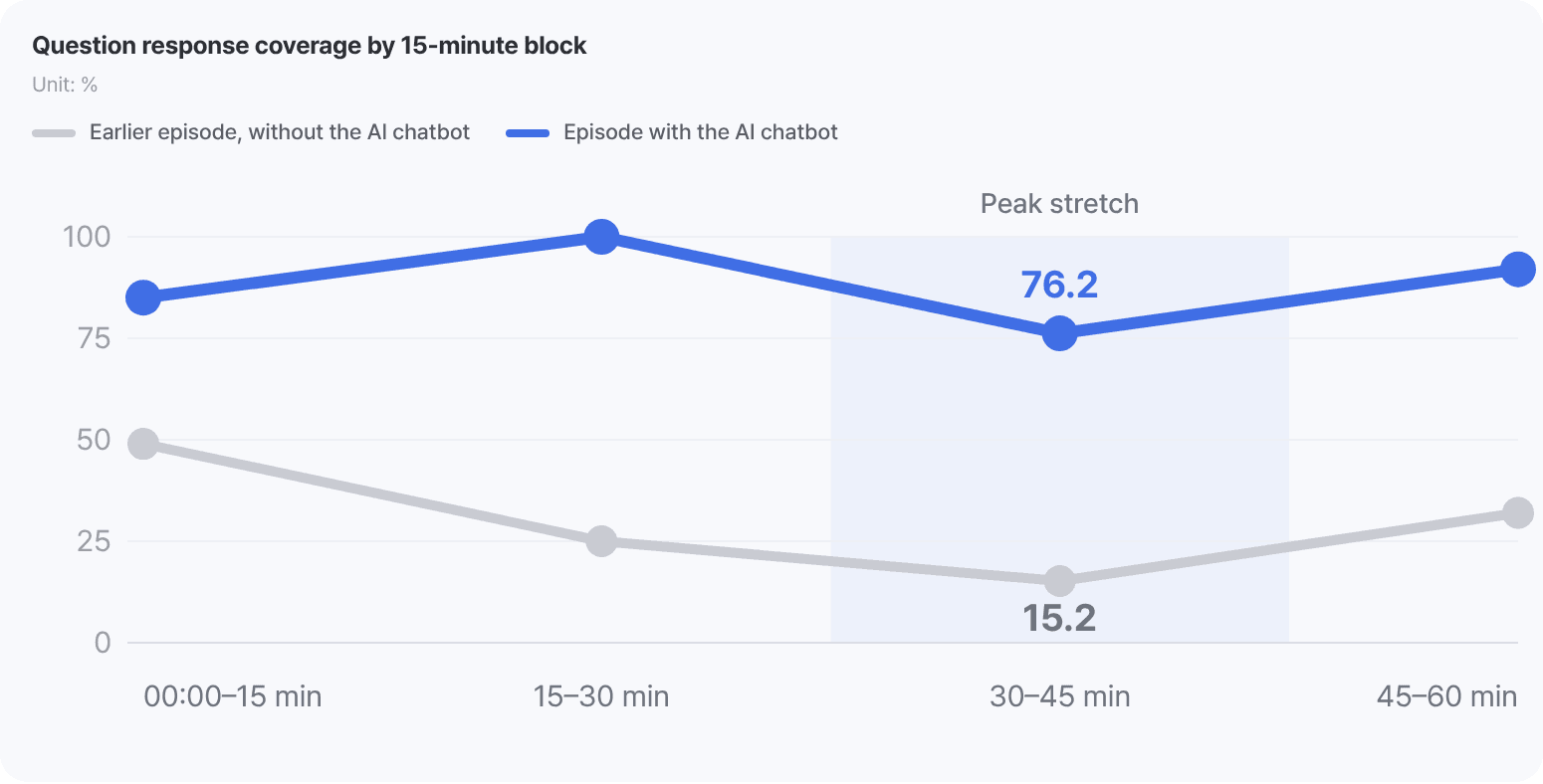
Even at the busiest stretch, response rate holds without adding a single person to the operations team.
2) Watch Time, Clicks, and Conversion Up. Spam Cut in Half.
Does a slow reply really cost that much? We isolated viewers who joined the chat and viewers who stayed silent, inside the same broadcast, same products, same time slot.
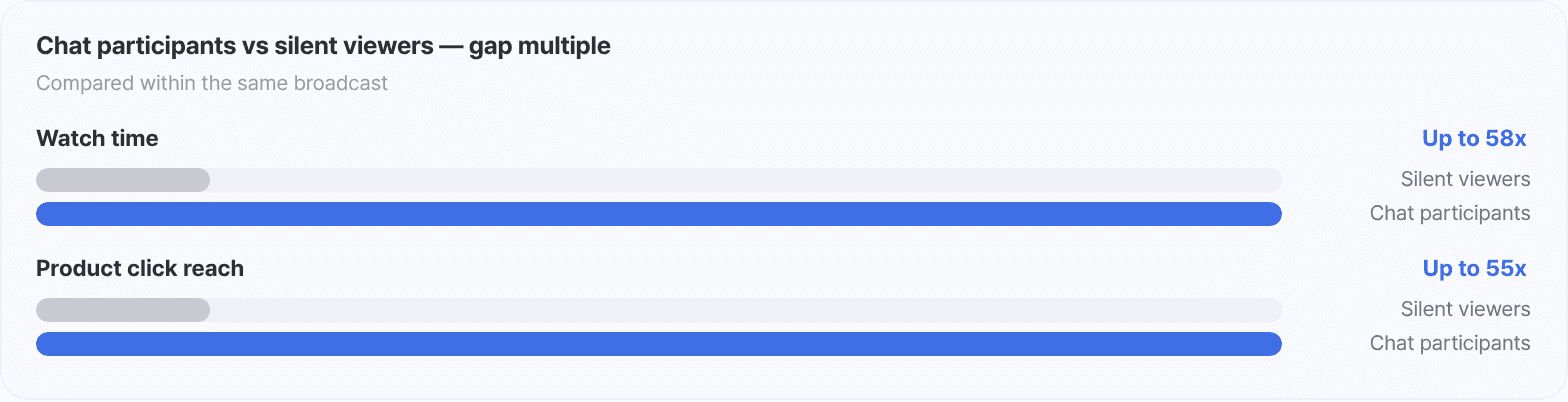
Purchase conversion tracked response rate upward too. Viewers who joined the chat stayed 40x to 58x longer than non-participants, and reached a product click 25x to 55x more often. That is the reason to pull more viewers into the chat. Questions posted in live chat were the last thing customers wanted confirmed before buying. With no answer, they never resolve the hesitation and simply leave. As response rate climbs, watch time and product clicks climb with it.
Conversion was not the only thing that shifted. When questions go unanswered, some viewers post the same one over and over and flood the chat. Once response rate rose with the AI chatbot, abusive repeat chats fell from 11.8 to 5.3 per 100 chats. With fewer people left hanging, there was no reason to ask twice.
3) Can You Hand Every Answer to AI?
The AI does not handle everything on its own. It takes the repeat questions first, while judgment calls and final checks stay with the operator (CS staff, MD). Get price, stock, or offer terms wrong and the fallout goes past a complaint into refund requests and lost trust. So Shoplive holds back low-confidence answers from going out automatically and routes them through a person first.
Accuracy also improves with use. The share of questions the AI both understood and answered on its own rose from 55.47% to 68.13%, up 12.66 points across successive episodes. The more operating logs pile up, the wider the range the AI covers and the less a person has to touch.
"As broadcasts got bigger, response speed was a real worry. The chatbot takes the repeat questions first, and our answering efficiency improved dramatically." - Inbin Jung, Team Lead, Semo C&C
Four Things That Changed
Four things changed after the Shoplive AI Chatbot went in.
Throughput: answers go out without anyone typing them, so
more questions got answered in the same window.Consistency: the AI answers to one standard, so
answer quality stayed evenno matter how experienced the operator was.Peak defense: headcount stayed the same, yet
response rate held through the heaviest stretch.Accurate information: answers draw on the latest registered data, so
changes showed up in repliesright away.
See it on video
A demo of how far the AI chatbot goes when it answers live, on air.
Even what's inside the image — Asked what the Antartica jacket is filled with, it answers goose down and feather — information printed in the product image, not the page text.
Fit and sizing — Asked how long the Guchi Belted Long Down runs on someone 165cm, it answers: to the knee.
Same-day offers — It also learns day-of details, like which card promotions are running during that broadcast.
FAQ
Q. What exactly does the AI chatbot do?
The Shoplive AI Chatbot reads the context of questions posted in live chat, drafts an answer, and sends it. Operators take the questions that need judgment and the final checks.
Q. How much does response rate improve with an AI chatbot?
Comparing episodes with and without the Shoplive AI Chatbot, question response coverage rose from 17.7% to 81.4%. The number worth watching is the peak: through the busiest 15-minute stretch, response rate went from 15.2% to 76.2%, a 5x increase. Customer response never broke off.
Q. How does chat handling relate to revenue?
Within the same broadcast, viewers who joined the chat stayed 40x to 58x longer than silent viewers and reached product clicks 25x to 55x more often. Whether questions get answered is the bottleneck on conversion.
Q. Would adding more operators solve it?
On large broadcasts with heavy concurrent viewership, questions arrive at an average of 10.27 per minute while one operator handles 1.3 to 1.8 per minute. Inbound runs 5.7x throughput, so past a certain scale there is always a stretch that headcount cannot cover.
Q. What if an AI answer is wrong?
An operator can review and edit the answer before it goes out. The AI takes repeat questions first, and operators handle anything that needs judgment. The AI question recognition rate also rose from 55.47% to 68.13%, up 12.66 points, across successive episodes. The more operating logs accumulate, the wider that recognition range gets.
Q. Can we use this on our own live broadcasts?
Yes. It comes with the Shoplive live commerce solution. Registering your frequent questions and answers in advance makes the replies more accurate.


