Myrealtrip's live switch: 3.4x watch time

Words by
Jay
Edited by
Lucid
💡 Key takeaways
Myrealtrip moved to Shoplive on three criteria: live stability, ease of operation, and the viewer experience.
After the switch, watch time per broadcast rose 3.4x, monthly total watch time 9x, and live GMV about 75 percent against the first half average.
PIP, data integration and operating insights gave them a data driven way to run live commerce: hold the viewer, then read what worked.
One platform swap, and watch time per broadcast climbed about 3.4x while monthly watch time went up 9x. That's what happened after Myrealtrip, one of Korea's largest travel platforms, moved its live commerce stack to Shoplive. Here is what changed, why they decided to switch, and how they got past the worries that usually stall a migration.
What changed after Myrealtrip moved to Shoplive?
How much longer does one broadcast hold a viewer?
After the switch, average watch time per broadcast rose roughly 3.4x. This is a per broadcast number, so it has nothing to do with running more shows. Viewers who came in simply stayed longer.
What made that possible is PIP (picture in picture). The stream keeps playing in a small player even when a viewer opens a product detail page or another screen, so they don't drop out of the broadcast while comparing trips.
Live chat and reactions picked up too, because Shoplive's event tools keep giving viewers something to react to. Hosts can push quizzes, coupons, perks and prize draws mid stream, and pin the chat messages that land so other viewers jump back in. Banned word filtering and user blocking kept the chat tidy for the whole show, which is part of why viewers stayed in it.
"Shoplive's event tooling is good enough that we made live watch time a business unit KPI."
Kim, Team Lead, Growth Marketing at Myrealtrip
How much did total viewing grow as they scheduled more shows?
Monthly total watch time expanded about 9x versus the old platform. Monthly total is really just broadcasts multiplied by watch time per broadcast. Rehearsals, product registration and going live all got simpler, which freed up operating capacity and let the same team run more shows. Add rising engagement per show on top, and the two together pushed the total up.
Why don't viewers leave when they share a link or check prices elsewhere?
Travel is rarely a solo decision. People talk it over with a friend or family, compare prices across other agencies and platforms, and only then pay. A viewer will stop mid stream to share a link with a "let's look at this together," then open another app to check the price. On the old setup, most of that ended in a drop off.
Shoplive keeps that whole process inside the broadcast. Thanks to PIP, the stream plays on while someone browses a detail page or checks prices in another app, and live link sharing passes the broadcast itself along to a friend. The Yeogi Eottae live commerce case saw the same effect in travel, where PIP and the mobile SDK were the features that cut viewer drop off.
So the share it, compare it, talk it over pattern that defines travel buying now happens without leaving the stream. The more people watch together, the further each broadcast reaches.
Why does longer viewing turn into revenue?
After moving to Shoplive, live GMV rose about 75 percent against the first half average. The viewing metrics weren't the only thing that moved: the transactions followed.
More watch time isn't just more traffic. With high consideration, high ticket products like travel, the longer someone watches the more they understand and trust what they're buying, so time on the broadcast and purchase conversion move together.
At Myrealtrip, viewers who stayed longer bought, live shows brought in new member signups, and people who came for flights ended up adding related products like stays and tours. That is a big part of why they have scaled their live schedule so quickly.
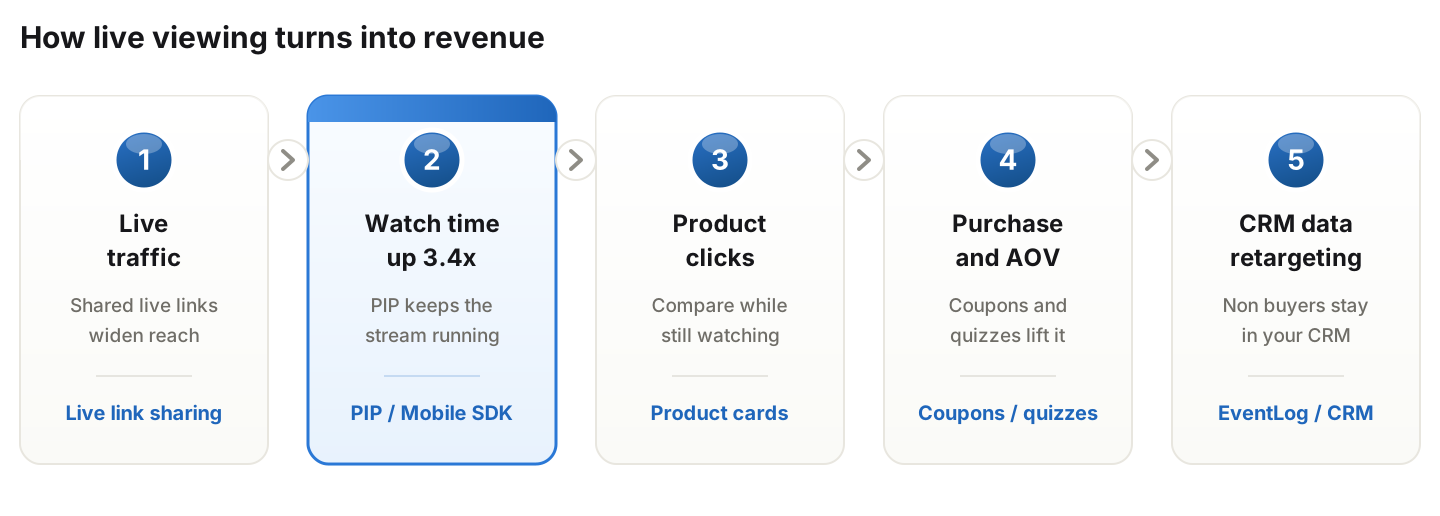
The path from live viewing to revenue runs in five steps.
1. Shared live links bring new viewers in.
2. PIP keeps the stream running so time per session goes up.
3. Viewers move between product cards and detail pages to compare.
4. Coupons and quizzes lift both conversion and order value.
5. Even non buyers land in the company's CRM through EventLog and become retargeting audiences.
How did live data reshape the next schedule?
Shoplive's admin insights break down watch time, traffic sources, product clicks and conversion contribution per broadcast. Scaling a schedule quickly means knowing which show worked and why, show by show. That data doesn't sit in the admin panel either: event integration pushes it into the company's own CRM, so the team can retarget people who watched but didn't buy, or manage frequent viewers separately.
Myrealtrip uses that to see which products and slots hold attention and convert, and they keep widening live commerce beyond a single category into flights, stays, tours and packages. Deciding the next schedule from per broadcast numbers instead of instinct is the most practical change since the switch.
Why did Myrealtrip make the call?
Myrealtrip was already running live in its own app, and three things mattered most: platform stability, ease of operation, and the viewer experience. Travel products carry high price tags, and during sales or peak season viewers pile in over a short window. If the stream stutters even briefly, that turns straight into lost revenue.
First,
live stability. They looked at whether the stream held up in high definition when traffic spiked.Second,
ease of operation. It mattered whether marketing and commerce staff could handle rehearsals, product registration, going live and replays without pulling in the dev team.Third,
the viewer experience. Watching had to carry over smoothly whether someone was on the app or the web, and even when they moved to a product page.
Stability showed up as streams that held through heavy traffic, ease of operation as more shows on the calendar, and viewer experience as the retention that PIP and link sharing produced. None of these three are travel specific: every company running its own live commerce channel runs into the same checklist.
How did they get past what usually stalls a migration?
How long did the switch actually take?
Even with clear criteria, what pushes a migration back is dev resource and scheduling. When the live channel sits with marketing or commerce, locking in dev time is especially hard. Myrealtrip started with the same worry, and then two developers finished the Shoplive SDK integration in two weeks (10 days). Because the player drops into the existing app and web screens rather than rebuilding them, they carried their own channel forward with no heavy development and no service downtime.
"I expected a platform change to take a long time in development. In practice two developers had it in place in two weeks. Swapping a live platform turned out not to be difficult or much of a burden."
Lee, Manager, Growth Marketing at Myrealtrip
That let them expand the schedule right away in July, starting with the Daily Departure Sale, and the 9x monthly watch time above traces back to that point.
How did they connect their existing systems and data?
The second worry is integration. The longer you run live commerce, the more you need automated product registration, viewing data in your CRM, a player you can customize. Platforms that are hard to integrate tend to stall right here. Shoplive integrates broadly through APIs and its SDK, across three areas.
First,
data integration. Campaigns, products, streams and real time viewing metrics are all readable by API, products upload one at a time or by spreadsheet and API, and user actions like views, clicks, buy button taps, wishlists and quiz answers come through as events you can forward straight into your GA, ad platforms and CRM.Second,
the player itself. Loading screen, colors, overlay UI placement: all of it bends to the brand.Third,
auth and business logic. JWT tokens connect your existing member system as is, and coupon issuing, product landing and custom actions hook into your own logic through handlers.
The result is a live channel wired into your systems from member auth through to data flow. The per broadcast insights and CRM retargeting above both run on that integration. The Shoplive developer docs spell out what is available.
If you're weighing a move to Shoplive
Myrealtrip's story isn't a travel story. If your current live or short form platform has you stuck on dev resource, viewers dropping off, or an integration that never quite meets your systems and data, changing the platform alone can clear the problem. Tell us what falls short in your setup today and we'll diagnose it with you in a Shoplive demo and map out how the switch would run.
Frequently asked questions
Q. Didn't the numbers rise simply because they ran more shows?
Schedule volume and engagement per show are separate metrics. Average watch time per broadcast has nothing to do with how many shows run, and it still rose about 3.4x against the old platform. Viewers watch one show for longer, and once you add the bigger schedule on top, monthly total watch time reaches about 9x.
Q. Why does more watch time help revenue?
With high consideration, high ticket categories such as travel, living, beauty and fashion, watch time and purchase conversion move together. The longer someone watches, the better they understand and trust the product, which carries through to purchases, new member signups and related product orders. For Myrealtrip, live GMV rose about 75 percent against the first half average after the switch.
Q. Why are PIP and link sharing effective for travel products?
High consideration purchases usually get decided by several people, or after comparing prices. Live link sharing hands the broadcast to a friend, and PIP with the mobile SDK keeps the stream playing while someone checks a product page or compares prices in another app. That cuts drop off during those detours and lengthens watch time.
Q. Why did Myrealtrip move to Shoplive?
They judged it on three things: live stability, ease of operation, and viewer experience. Shoplive streams in high definition without stutter when traffic spikes, lets marketing and commerce staff operate without the dev team, and carries viewing smoothly across app and web.
Q. How long does replacing a live platform take?
For Myrealtrip, two developers completed the Shoplive SDK integration in about two weeks. The player sits on top of your existing app and web, so your own channel carries on without heavy development. Actual timelines vary with how your channels are built.
Q. Will service go down or viewer data disappear during the switch?
Shoplive integration drops a player into your existing app and web screens, so you can migrate without heavy development or downtime. What exactly carries over depends on your channel setup, and we go through that with you during onboarding.
Q. Can Shoplive integrate with our systems and data, or be customized?
Yes. Campaigns, products, streams and real time viewing metrics integrate by API, and products upload by spreadsheet or API. User actions like views, purchases and wishlists come through as events you can send to your GA, ad platforms and CRM, and the player UI, overlays, authentication (JWT) and coupon or landing behavior all customize to your brand and your logic.
Q. How do we add live commerce to our own store?
A video commerce platform like Shoplive lets you build live commerce into your own app and web through SDK integration alone, without heavy development. Web goes in as a script, mobile through the iOS and Android SDKs.


